
Review: Small Mouth Sounds
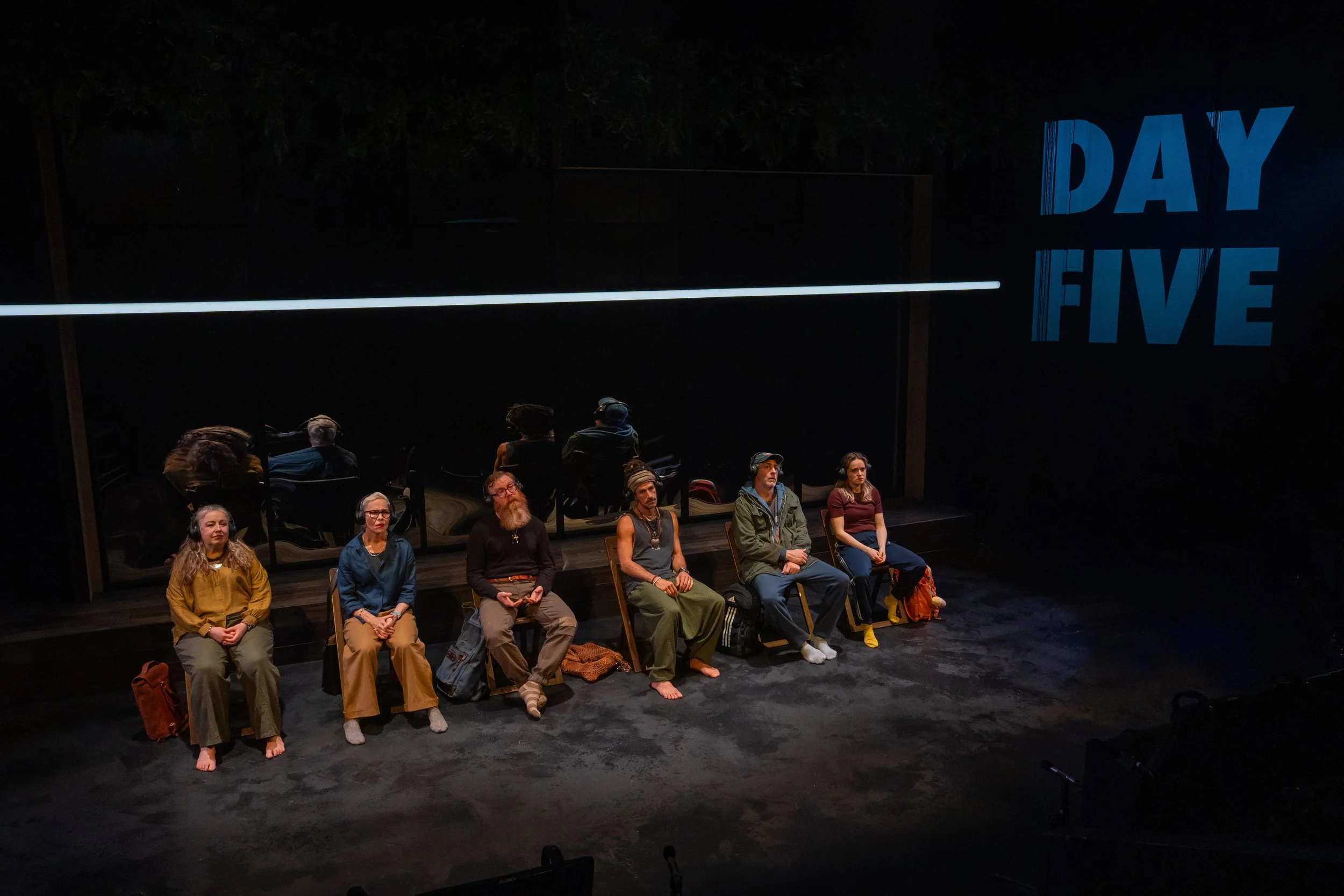
Picture: Listening to The Teacher/Voice in the QTC Small Mouth Sounds, image credit Stephen Henry (NOT a Creative Futures Photography image)
Small Mouth Sounds is an absurdist play that seeks to explore the core of human pain. Attending a New York silent spiritual retreat inspired Bess Wohl to write a play set across five days of a fictious retreat. The show brings six individuals together; each facing up to different problems in their lives, and all hoping to benefit from spending time reflecting on the wise words of the ‘guru’ (Barbara Lowing, The Teacher/Voice).
Before the show, Queensland Theatre Company (QTC) audiences are reminded that Co-Directors Bridget Boyle and Nathan Sibthorpe lean in to the themes of listening and silence by requiring all members of the audience to wear headphones during the performance. And that use of headphones is just one of several techniques in the QTC Small Mouth Sounds that challenges me to think more about what it is that I value about live theatre.
For me, much of the enjoyment of live theatre is to be able to see and hear the interactions of the performers, and to share in that experience with fellow spectators—where seeing and hearing the live performance, and sharing laugher or silence with an audience, enhances the experience. In this QTC production, Boyle and Sibthorpe skilfully invert many aspects of the genre, challenging audiences with their creative choices.
The six on-stage actors—Louise Brehmer (Joan), Stephen Geronimos (Rodney), Judy Hainsworth (Alicia), Kieran Law (Jan), Jodie Levesconte (Judy) and Anthony Standish (Ned)—are required to express feelings physically, as they have limited opportunity to speak. When they do speak, they are most frequently inside their accommodation and behind the ‘glass’ walls of the rooms. And Standish’s excellent tragi-comic monologue—which begins as Ned’s opportunity to pose a question of the Voice, and quickly spirals from admiration for the teacher into a catalogue of appalling personal losses—features Ned standing centre-stage, speaking into a microphone while looking out into the audience.
In contrast, when listening to the disembodied Voice, the participants put on their individual headphones, and sit facing out into the audience. And the off-stage Teacher is only heard and not seen, demonstrating Lowing’s skill as talented voice artist who conveys the emotional load of an expert who is also another individual who is facing their own pain and suffering.
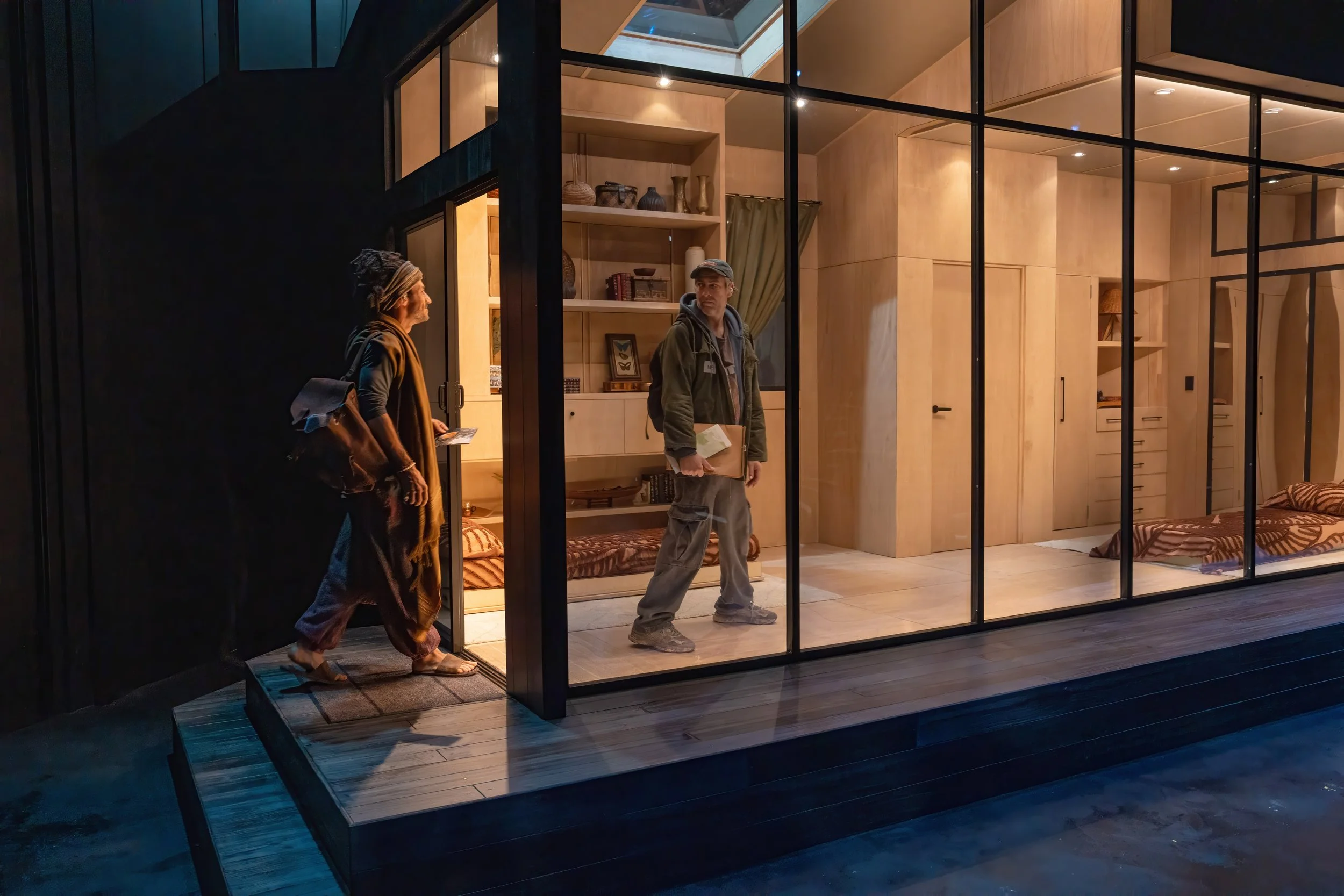
Picture: Walking into the retreat accommodation in the QTC Small Mouth Sounds image credit Stephen Henry (NOT a Creative Futures Photography image)
Equally, the set, sound, and lighting design contributed to my post-show conversation. I enjoyed many aspects of the work by Isabel Hudson (set and costume design), Mike Willmett (Composer & Sound Designer), and Christine Felmingham (Lighting Designer). The use of the bar of bright light, switching the mood from day to night, and the impressive design of the different bedrooms, are memorable takeaways from the show. Equally, the costumes are an important part of communicating the personalities of characters who so rarely speak, and for conveying the passage of time. And the sound design places the retreat firmly in Australia, complete with mozzies and kookaburras. However, although the regular switches to full black emphasise the episodic nature of the show, I was not as comfortable with the frequent ‘black,’ and have added this to my list of content warnings. And wearing the headphones created a degree of separation from the performance and from fellow members of the audience—leading to me wondering if the occasional laughter was ‘live’ or just canned (it was live).
During the play, the Voice implores the characters to change (‘somebody please change’), asking ‘why are you here?’ The QTC Small Mouth Sounds demonstrates the skill of the performers and creatives. There are a few moments of light humour, but I didn’t feel that the play encourages us to think about how ‘we address life’s biggest questions when words fail us.’ Small Mouth Sounds reminds me that it is difficult to understand without being able to speak and to listen, and I came away wishing that the writer had chosen a different medium for the work; perhaps a book, where the author might more easily take audiences into the minds and emotions of the six characters in search of meaning or resolution.
Having seen admired the individual and joint shows created by the Co-Directors of the QTC Small Mouth Sounds my expectations were high. Memorable shows such as Pride & Prejudice, Death in a Statesman, Maybe It’s Only Us, Statum, Bunker, and We Live Here each demonstrate Boyle and Sibthorpe’s abilities to encourage dialogue, to explore the use of different media, and to both intrigue and entertain audiences. I will always seek out work by Boyle, Sibthorpe, and QTC. However, although Small Mouth Sounds is an impressive development of their individual and collective practice, I am only recommending this show to friends who are fans of absurdist theatre, or who are interested to experience a production that so cleverly inverts and challenges more conventional theatrical events.
Audience information: Small Mouth Sounds, Bille Brown Theatre, 78 Montague Rd, South Brisbane (13 October-1 November 2026). Tickets $72-$85 (season ticket, $25 Mobtix, and $36 under 36 options also available—all plus transaction fee of $5). 100 minutes, with no interval. This production contains mature themes, episodic full black, mild infrequent coarse language, simulated sex sounds and full-frontal male nudity. Recommended for ages 15+.. Program and education resources available. Recommended for ages 15+
Additional credits: NJ Price (Fight Coordinator), Michelle Miall (Intimacy Coordinator), Georgia Gould (Stage Manager), and Tia-Hanee Cleary (Assistant Stage Manager).
The reviewer attended the 16 October 2026, 7:30pm opening night.
Presented by Queensland Theatre Company.